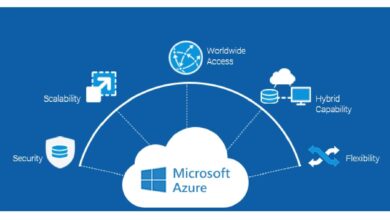
Managing cloud expenses doesn’t have to feel like navigating a maze blindfolded. With Azure Price Cal, you gain real-time insights, predictive analytics, and full cost transparency—empowering teams to optimize spending without sacrificing performance.






What Is Azure Price Cal and Why It Matters

Azure Price Cal is not just another cost calculator—it’s a dynamic financial intelligence tool designed to forecast, analyze, and optimize Microsoft Azure spending. As cloud environments grow more complex, businesses need precise tools to avoid budget overruns and wasted resources. Azure Price Cal fills this gap by offering real-time pricing simulations based on actual usage patterns, region-specific rates, and service combinations.
Defining Azure Price Cal Accurately
Despite common misconceptions, Azure Price Cal isn’t an official Microsoft product name. Instead, it refers to a suite of tools and methodologies used to estimate, track, and manage Azure costs—primarily leveraging the Azure Pricing Calculator and Azure Cost Management + Billing. These tools allow users to model scenarios before deployment, helping prevent costly surprises.
- It enables pre-deployment cost modeling for VMs, storage, networking, and PaaS services.
- It supports multi-region comparisons to identify the most cost-effective deployment zones.
- It integrates with enterprise agreements and reserved instances for deeper savings analysis.
“The biggest cloud cost mistake isn’t overspending—it’s spending blindly. Azure Price Cal brings visibility where it’s needed most.” — Cloud Financial Analyst, Gartner
How Azure Price Cal Differs from Standard Billing Tools
Traditional billing dashboards show what you’ve already spent. Azure Price Cal, however, focuses on predictive analytics—answering “what if” questions before resources go live. For example: What happens to your monthly bill if you scale from 10 to 50 virtual machines? How much can you save by switching from pay-as-you-go to reserved instances?
This forward-looking approach transforms financial planning from reactive to proactive. Unlike basic invoice reports, Azure Price Cal tools simulate configurations, apply discounts, and factor in data transfer fees—elements often overlooked in initial estimates.
Key Features of Azure Price Cal Tools
The strength of Azure Price Cal lies in its comprehensive feature set, designed for both technical teams and finance stakeholders. Whether you’re a DevOps engineer or a CFO, these tools offer tailored insights to align cloud usage with business goals.
Real-Time Cost Simulation Engine
At the heart of Azure Price Cal is its simulation engine, which calculates projected costs based on selected services, regions, and usage duration. You can configure virtual machines with specific vCPU, RAM, and OS types, then instantly see the financial impact.
For instance, choosing a Standard_D4s_v3 VM in East US versus West Europe reveals subtle price differences due to regional tax structures and energy costs. The tool also factors in associated services like public IP addresses, load balancers, and disk storage—providing a holistic view.
- Simulates hourly, daily, and monthly costs.
- Supports custom usage hours (e.g., 8×5 vs. 24×7).
- Includes egress bandwidth pricing, often a hidden cost.
Integration with Azure Reservations and Savings Plans
One of the most powerful aspects of Azure Price Cal is its ability to model savings from long-term commitments. By applying 1-year or 3-year reserved instance pricing, users can instantly compare pay-as-you-go versus reserved costs.
The calculator shows potential savings of up to 72% when reserving VMs, making it a critical tool for financial planning. It also supports Azure Hybrid Benefit, allowing organizations to apply existing Windows Server licenses to reduce costs.
According to Microsoft’s documentation, reserved instances are ideal for stable workloads, while savings plans offer flexibility across services.
Exportable Reports and Team Collaboration
Decision-making in enterprises requires collaboration. Azure Price Cal allows users to save, share, and export cost estimates as PDFs or CSV files. This functionality is especially useful during budget reviews, procurement approvals, or migration planning sessions.
Teams can compare multiple scenarios side-by-side—such as on-premises vs. cloud, or different architecture patterns—and present data-driven recommendations to leadership.
Step-by-Step Guide to Using Azure Price Cal
Getting started with Azure Price Cal is straightforward, but mastering it requires understanding its full capabilities. Follow this step-by-step process to build accurate cost models for your cloud projects.
Step 1: Access the Azure Pricing Calculator
Begin by visiting the official Azure Pricing Calculator. No login is required to start building estimates, though signing in with an Azure account enables saving and sharing.
Once on the page, you’ll see a clean interface with categories like Compute, Storage, Networking, Databases, and AI + Machine Learning. Each category contains dozens of services, all with configurable pricing options.
Step 2: Build Your Cloud Architecture Model
Add services by clicking the “Add to estimate” button. For example, to model a web application:
- Select Virtual Machines under Compute.
- Choose the VM size, region, and OS.
- Add Managed Disks for storage.
- Include Public IP Address and Load Balancer under Networking.
- Add Azure SQL Database for backend data.
Each addition updates the total cost in real time, displayed at the top right in your selected currency.
Step 3: Apply Discounts and Optimize
Click the “Estimate summary” panel to access advanced options. Here, you can:
- Switch from pay-as-you-go to Reserved VM Instances.
- Apply Azure Hybrid Benefit for Windows and SQL Server.
- Select Sustained Use Discounts (automatically applied in some regions).
- Adjust usage duration (e.g., 730 hours/month for 24×7 operation).
The tool recalculates savings instantly, showing both absolute and percentage reductions.
Advanced Strategies for Azure Price Cal Optimization
While basic use of Azure Price Cal is intuitive, advanced users leverage it for strategic financial engineering. These techniques go beyond simple cost estimation to drive enterprise-wide savings and compliance.
Leveraging Azure Price Cal for Multi-Cloud Comparisons
Although Azure Price Cal is Azure-specific, savvy teams use it to benchmark against AWS and Google Cloud. By modeling identical workloads across platforms, they identify the most cost-effective provider.
For example, a company running a Kubernetes cluster can simulate AKS (Azure Kubernetes Service) costs using Azure Price Cal, then compare it with EKS (AWS) and GKE (Google) using their respective calculators. This apples-to-apples comparison supports vendor negotiation and hybrid cloud strategies.
A 2023 study by Flexera found that 89% of enterprises use multiple clouds, making cross-platform cost analysis essential.
Using Azure Price Cal in Migration Planning
Migrating from on-premises infrastructure to Azure is a major financial decision. Azure Price Cal helps answer critical questions: Will the cloud be cheaper? What’s the break-even point? How do ongoing operational costs compare to capital expenditures?
By inputting current server specs and usage patterns, teams can model a direct lift-and-shift migration. They can then explore optimization paths—like moving to PaaS or serverless—to reduce costs further.
Microsoft’s Azure Migrate tool integrates with cost calculators to provide TCO (Total Cost of Ownership) analyses, enhancing the accuracy of migration forecasts.
Scenario Modeling for Seasonal Workloads
Not all workloads are constant. Retailers face spikes during holidays; educational platforms peak during enrollment periods. Azure Price Cal allows modeling of variable usage patterns.
For example, you can create three scenarios:
- Baseline: 10 VMs running 24×7.
- Peak: 30 VMs for 30 days.
- Hybrid: 10 VMs + auto-scaling to 50 during high demand.
By comparing these, you can justify auto-scaling policies or spot instance usage, reducing average monthly costs by up to 40%.
Common Mistakes When Using Azure Price Cal
Even experienced users make errors that undermine the accuracy of their cost models. Avoiding these pitfalls ensures your Azure Price Cal estimates reflect real-world expenses.
Ignoring Data Transfer and Egress Fees
One of the most frequent oversights is neglecting data egress charges. While inbound data is free on Azure, outbound traffic—especially to the internet or other regions—incurs fees.
For example, transferring 10 TB of data from East US to users globally can cost over $1,000/month. Azure Price Cal includes these fees, but users must explicitly enable the networking components in their estimate.
“I built a perfect VM setup in the calculator, but forgot egress. My actual bill was 3x higher.” — Anonymous Azure Admin, Reddit
Overlooking Licensing and Support Costs
The Azure Price Cal focuses on infrastructure and platform services but doesn’t automatically include third-party software licensing or premium support plans.
If you’re using SQL Server Enterprise Edition or Red Hat Enterprise Linux, those license costs must be added manually. Similarly, Azure Support Plans (Basic, Developer, Standard, Professional Direct) are billed separately and should be factored into total cost models.
Using Default Configurations Without Customization
Many users accept default settings like 24×7 usage or standard storage tiers. However, real-world usage is rarely constant.
Customizing usage hours, selecting lower-cost storage (e.g., Cool or Archive tiers), and enabling auto-shutdown can drastically reduce costs. Azure Price Cal allows these adjustments, but only if users actively engage with the options.
Integrating Azure Price Cal with Cost Management Tools
To move from estimation to enforcement, Azure Price Cal must be integrated with operational cost management systems. This creates a closed-loop financial governance model.
Connecting to Azure Cost Management + Billing
After deployment, actual spending should be monitored using Azure Cost Management. This tool pulls real-time data from your subscription and compares it to your initial Azure Price Cal estimates.
You can set up budgets, alerts, and reports to track variance. For example, if your estimate was $5,000/month but actual spend hits $7,000, an alert triggers an investigation.
Using APIs for Automated Cost Forecasting
Enterprises with CI/CD pipelines can integrate Azure Price Cal data via APIs. The Cost Management API allows developers to embed cost checks into deployment workflows.
Imagine a DevOps engineer trying to spin up a new environment. Before approval, an automated script runs a cost simulation using Azure Price Cal logic and returns the projected monthly expense. If it exceeds policy limits, the deployment is paused for review.
Role-Based Access and Financial Governance
Cost control isn’t just technical—it’s organizational. Azure Price Cal estimates should be part of financial governance frameworks.
By assigning roles like Cost Viewer or Billing Contributor, companies ensure that only authorized personnel can modify or approve high-cost configurations. This prevents shadow IT and unauthorized spending.
Future Trends in Azure Price Cal and Cloud Cost Intelligence
The evolution of cloud financial management is accelerating. Azure Price Cal is just the beginning of a broader shift toward AI-driven cost optimization and real-time financial agility.
AI-Powered Predictive Cost Modeling
Microsoft is investing heavily in AI for cost management. Future versions of Azure Price Cal may include machine learning models that predict spending based on historical trends, seasonal patterns, and workload behavior.
For example, if a VM cluster typically scales up every Friday, the system could automatically suggest reserved instances or spot pricing to reduce costs.
Carbon-Aware Cost Calculations
Sustainability is becoming a financial factor. Azure Price Cal may soon integrate carbon emissions data, allowing organizations to choose regions with lower carbon intensity—even if slightly more expensive—aligning cost with ESG goals.
Microsoft’s Sustainability Calculator already estimates carbon impact, and future integration with pricing tools is expected.
Unified FinOps Platforms
The future belongs to unified FinOps (Financial Operations) platforms that merge cost, performance, and business value. Azure Price Cal will likely evolve into a component of broader financial dashboards, offering ROI analysis, unit cost per transaction, and business impact scoring.
Tools like Cloudability and Apptio are already pushing in this direction, and Microsoft may enhance Azure Price Cal to compete.
What is the difference between Azure Price Cal and Azure Total Cost of Ownership (TCO) Calculator?
The Azure Price Cal focuses on estimating ongoing operational costs for Azure services, while the TCO Calculator compares the total cost of running workloads on-premises versus migrating to Azure. The TCO tool includes hardware depreciation, maintenance, and power costs, making it ideal for migration justification.
Can Azure Price Cal predict my actual monthly bill?
Azure Price Cal provides highly accurate estimates, but actual bills may vary due to unanticipated usage, data egress, or service changes. For best accuracy, update your model regularly and integrate it with Azure Cost Management for real-time monitoring.
Is Azure Price Cal free to use?
Yes, the Azure Pricing Calculator and related tools are completely free. You don’t need an Azure subscription to build cost estimates, though signing in allows you to save and share them.
How often are Azure prices updated in the calculator?
Azure updates the pricing calculator in real time whenever service prices change. Microsoft typically announces price adjustments quarterly, and the tool reflects these immediately to ensure accuracy.
Can I use Azure Price Cal for reserved instance planning?
Absolutely. Azure Price Cal includes options for 1-year and 3-year reserved instances across VMs, SQL Database, Cosmos DB, and other services. It shows potential savings compared to pay-as-you-go pricing, making it essential for long-term planning.
Mastering Azure Price Cal is no longer optional—it’s a strategic imperative. From initial estimation to ongoing optimization, this tool empowers organizations to take control of their cloud finances. By combining predictive modeling, real-time analytics, and integration with governance frameworks, Azure Price Cal transforms cloud cost management from a reactive burden into a proactive advantage. As cloud environments grow more complex, the ability to forecast, compare, and optimize spending will define competitive success. Start using Azure Price Cal today to build a financially resilient, agile, and sustainable cloud future.
Recommended for you 👇
Further Reading: