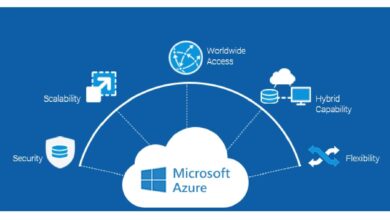
Cloud computing has transformed the way businesses operate, and at the forefront of this revolution stands msft azure. As Microsoft’s comprehensive cloud platform, msft azure delivers unmatched scalability, security, and innovation. Whether you’re a startup or a global enterprise, understanding its capabilities is essential for digital success.


What Is msft azure and Why It Matters

Microsoft Azure, commonly referred to as msft azure, is a cloud computing service created by Microsoft for building, testing, deploying, and managing applications and services through Microsoft-managed data centers. Launched in 2010, it has grown into one of the world’s leading cloud platforms, second only to Amazon Web Services (AWS) in market share.
Core Definition and Evolution
msft azure began as Windows Azure, primarily focused on application hosting. Over the years, it evolved into a full-fledged Infrastructure as a Service (IaaS), Platform as a Service (PaaS), and Software as a Service (SaaS) ecosystem. Today, msft azure supports over 200 products and services, ranging from virtual machines to artificial intelligence tools.
- Originally launched as Windows Azure in 2010
- Rebranded to Microsoft Azure in 2014
- Now serves customers in over 140 countries
Global Reach and Data Center Infrastructure
One of the defining strengths of msft azure is its global infrastructure. With more than 60 cloud regions worldwide — more than any other cloud provider — msft azure ensures low-latency access and compliance with local data regulations.
These regions are strategically distributed to support redundancy, disaster recovery, and data sovereignty. For example, Azure operates in regions like East US, West Europe, Southeast Asia, and even specialized ones like Azure Government and Azure China 21Vianet.
“Microsoft’s investment in global cloud infrastructure makes msft azure a top choice for multinational enterprises needing reliable, compliant, and scalable solutions.” — Gartner, 2023 Cloud Report
Key Services Offered by msft azure
msft azure isn’t just about hosting websites or virtual machines. It’s a vast ecosystem offering solutions across computing, networking, storage, analytics, and artificial intelligence. Let’s explore the core service categories that make msft azure indispensable.
Compute Services: Virtual Machines and Containers
At the heart of msft azure’s compute offerings are Virtual Machines (VMs), which allow users to run Windows and Linux environments in the cloud. These VMs can be scaled up or down based on demand, making them ideal for dynamic workloads.
Beyond VMs, msft azure supports containerized applications via Azure Kubernetes Service (AKS). AKS simplifies the deployment, management, and scaling of containerized applications using Kubernetes, an open-source orchestration system.
- Azure Virtual Machines support custom images and hybrid licensing
- AKS integrates seamlessly with DevOps pipelines
- Supports both Linux and Windows containers
Storage Solutions: Blob, Disk, and Data Lake
msft azure provides multiple storage options tailored to different needs. Azure Blob Storage is ideal for unstructured data like images, videos, and backups. It’s highly durable, with geo-redundant options ensuring data safety even during regional outages.
Azure Disk Storage offers high-performance SSDs and HDDs for VMs, while Azure Data Lake Storage is designed for big data analytics, supporting massive datasets with hierarchical namespace capabilities.
- Blob Storage supports hot, cool, and archive tiers for cost optimization
- Data Lake integrates with Azure Synapse Analytics and Power BI
- All storage services include encryption at rest and in transit
Networking: Virtual Networks and Content Delivery
msft azure’s networking capabilities ensure secure and efficient communication between cloud resources and on-premises systems. Azure Virtual Network (VNet) allows you to create isolated environments, define IP ranges, and control traffic flow using Network Security Groups (NSGs).
Azure also offers Content Delivery Network (CDN) services to cache content globally, reducing latency for end-users. This is especially useful for media streaming, e-commerce sites, and SaaS applications.
- VNet peering enables cross-region connectivity
- Azure Firewall provides stateful protection
- ExpressRoute offers private connections to Azure without going over the public internet
Security and Compliance in msft azure
Security is not an afterthought in msft azure—it’s built into every layer of the platform. From physical data center security to advanced threat detection, Microsoft invests heavily in protecting customer data.
Built-in Security Features
msft azure includes a suite of security tools under Azure Security Center (now part of Microsoft Defender for Cloud). This service continuously monitors your environment for vulnerabilities and threats, providing recommendations and automated remediation.
Features include Just-In-Time VM access, network hardening, and threat protection for servers, storage, and databases. Additionally, Azure Sentinel, a cloud-native Security Information and Event Management (SIEM) system, enables proactive threat hunting and incident response.
- Defender for Cloud offers unified security management
- Sentinel uses AI to detect anomalies and suspicious activities
- Integration with Microsoft 365 and Dynamics 365 enhances visibility
Compliance and Certifications
msft azure complies with a wide range of international and industry-specific standards, making it suitable for regulated industries like finance, healthcare, and government. Certifications include ISO 27001, HIPAA, GDPR, SOC 1/2/3, and FedRAMP.
Microsoft publishes a comprehensive compliance documentation portal where organizations can verify adherence to specific regulatory requirements. This transparency builds trust and simplifies audits.
“Azure’s compliance framework is one of the most extensive in the industry, covering over 140 compliance offerings.” — Microsoft Trust Center
Integration with Microsoft Ecosystem: A Key Advantage of msft azure
One of the most compelling reasons businesses choose msft azure is its seamless integration with other Microsoft products. If your organization already uses Microsoft 365, Active Directory, or Dynamics 365, migrating to msft azure becomes significantly easier.
Synergy with Microsoft 365 and Active Directory
msft azure integrates natively with Azure Active Directory (Azure AD), the identity and access management service that powers authentication across Microsoft 365, Windows 10/11, and thousands of third-party apps. This integration enables single sign-on (SSO), multi-factor authentication (MFA), and conditional access policies.
Organizations can synchronize on-premises directories with Azure AD using Azure AD Connect, enabling hybrid identity management. This is crucial for companies transitioning from legacy systems to the cloud.
- Azure AD supports over 2,600 pre-integrated SaaS applications
- Conditional Access policies enforce security based on user location, device health, and risk level
- Identity Protection uses AI to detect suspicious sign-in behaviors
Seamless Dynamics 365 and Power Platform Integration
For businesses leveraging customer relationship management (CRM) and enterprise resource planning (ERP) tools, msft azure enhances the functionality of Dynamics 365. Data from Dynamics can be processed, analyzed, and visualized using Azure services like Logic Apps, Functions, and Synapse Analytics.
Similarly, the Power Platform (Power BI, Power Apps, Power Automate) runs efficiently on msft azure infrastructure. Power BI, for instance, can connect directly to Azure SQL Database or Data Lake to generate real-time dashboards.
- Power Automate workflows can trigger Azure Functions
- Power Apps can pull data from Azure-hosted APIs
- AI Builder in Power Platform uses Azure AI services
Artificial Intelligence and Machine Learning with msft azure
msft azure is not just about infrastructure—it’s a leader in democratizing artificial intelligence (AI) and machine learning (ML). Through accessible tools and pre-built models, Azure empowers developers and data scientists to innovate without deep expertise in AI.
Azure Cognitive Services: Ready-to-Use AI APIs
Azure Cognitive Services provide pre-trained APIs for vision, speech, language, and decision-making. These services allow developers to add features like facial recognition, text translation, sentiment analysis, and anomaly detection to applications with minimal code.
For example, a retail app can use Computer Vision to analyze customer behavior from in-store cameras, or a customer support chatbot can leverage Language Understanding (LUIS) to interpret user intent.
- Face API detects and identifies human faces in images
- Text Analytics API extracts key phrases, entities, and sentiment
- Speech Services enable speech-to-text and text-to-speech conversion
Explore the full range of Cognitive Services at Azure Cognitive Services.
Custom Machine Learning with Azure Machine Learning Studio
For advanced use cases, msft azure offers Azure Machine Learning, a cloud-based environment for training, deploying, and managing ML models. It supports both code-first (Python, R) and no-code (drag-and-drop) experiences via Azure ML Studio.
Data scientists can use automated ML (AutoML) to test multiple algorithms and hyperparameters, selecting the best-performing model. Once trained, models can be deployed as web services accessible via REST API.
- AutoML accelerates model development
- Supports ONNX for model interoperability
- Integrates with MLOps for continuous integration and delivery
Cost Management and Pricing Models in msft azure
Understanding msft azure’s pricing is crucial for budgeting and optimizing cloud spend. Unlike traditional IT, where costs are upfront and fixed, cloud pricing is dynamic and usage-based. msft azure offers several pricing models to suit different needs.
Pay-As-You-Go vs. Reserved Instances
The most common model is Pay-As-You-Go, where you pay only for the resources you consume. This is ideal for startups and projects with unpredictable workloads. However, for stable, long-term workloads, Reserved Instances (RIs) offer significant savings—up to 72% compared to pay-as-you-go rates.
RIs require a one- or three-year commitment but can be applied to VMs, databases, and storage. Azure also allows RI flexibility—reservations can be exchanged or refunded if needs change.
- Pay-As-You-Go: No commitment, billed hourly or per minute
- Reserved Instances: Up to 72% discount with 1- or 3-year term
- Hybrid Benefit: Save up to 80% by using existing Windows Server licenses
Tools for Monitoring and Optimizing Costs
msft azure provides robust tools to track and control spending. Azure Cost Management + Billing offers detailed reports, budget alerts, and cost analysis by resource, department, or project.
You can set monthly budgets and receive email notifications when thresholds are exceeded. The tool also identifies idle or underutilized resources, suggesting rightsizing or shutdown to reduce costs.
- Cost Analysis dashboard visualizes spending trends
- Budget alerts prevent overspending
- Recommendations engine suggests optimization opportunities
Learn more at Azure Cost Management.
Real-World Use Cases of msft azure
msft azure isn’t just theoretical—it’s being used by organizations worldwide to solve real business challenges. From healthcare to finance, education to manufacturing, Azure’s versatility shines across industries.
Healthcare: Secure Data Sharing and AI Diagnostics
Hospitals and research institutions use msft azure to store and analyze patient data securely. For example, the UK’s National Health Service (NHS) leverages Azure to power its digital health initiatives, including telemedicine platforms and AI-driven diagnostic tools.
Azure Health Data Services enables FHIR-compliant data exchange, while AI models help radiologists detect tumors in medical imaging with higher accuracy.
- Ensures HIPAA and GDPR compliance
- Supports real-time patient monitoring systems
- Enables collaborative research across institutions
Finance: Fraud Detection and Risk Analysis
Banks and fintech companies use msft azure to detect fraudulent transactions in real time. By analyzing millions of transactions using Azure Stream Analytics and Machine Learning, systems can flag suspicious activity before damage occurs.
Azure also supports risk modeling, portfolio analysis, and regulatory reporting. JPMorgan Chase, for instance, uses Azure to enhance its cloud-based trading platforms and customer service chatbots.
- Real-time fraud detection with low latency
- Scalable infrastructure for high-frequency trading
- Secure access controls for sensitive financial data
Education: Remote Learning and Research Computing
Universities and schools use msft azure to deliver remote learning platforms, host student information systems, and support research computing. During the pandemic, many institutions rapidly scaled their online classrooms using Azure Virtual Desktop and Microsoft Teams.
Researchers also benefit from Azure’s high-performance computing (HPC) capabilities, running complex simulations in physics, genomics, and climate science.
- Supports virtual labs and coding environments
- Enables secure access to academic records
- Provides GPU-powered VMs for AI research
Future Trends and Innovations in msft azure
msft azure is not static—it evolves rapidly to meet emerging technological demands. Microsoft continues to invest billions annually in cloud innovation, focusing on sustainability, edge computing, and quantum computing.
Edge Computing with Azure IoT and Azure Stack
As more devices generate data at the network’s edge, msft azure extends its reach beyond data centers. Azure IoT Hub manages millions of connected devices, collecting and analyzing sensor data in real time.
Azure Stack brings Azure services to on-premises environments, enabling hybrid scenarios where data must remain local due to latency or compliance reasons. This is vital for industries like manufacturing, oil & gas, and defense.
- Azure IoT Edge runs AI models directly on devices
- Azure Stack HCI integrates with existing data centers
- Supports offline operation and local processing
Sustainability and Green Cloud Initiatives
Microsoft has committed to being carbon negative by 2030 and removing all historical emissions by 2050. msft azure plays a central role in this mission. Data centers are powered by renewable energy, and Azure provides tools like the Carbon Impact Dashboard to help customers measure their cloud carbon footprint.
Efficient cooling systems, AI-driven energy optimization, and water conservation efforts further reduce environmental impact.
“By choosing msft azure, organizations aren’t just adopting cutting-edge technology—they’re contributing to a more sustainable future.” — Microsoft Sustainability Report 2023
Quantum Computing: The Next Frontier
Though still in early stages, Microsoft’s Azure Quantum is positioning msft azure as a pioneer in quantum computing. Developers and researchers can experiment with quantum algorithms using hardware from partners like IonQ and Quantinuum.
While practical applications are years away, potential use cases include drug discovery, materials science, and complex optimization problems in logistics and finance.
- Azure Quantum offers a full-stack development environment
- Q# programming language designed for quantum logic
- Access to real quantum hardware and simulators
What is msft azure?
msft azure is Microsoft’s cloud computing platform that provides a wide range of services including virtual machines, storage, networking, AI, and analytics. It enables businesses to build, deploy, and manage applications across a global network of data centers.
How does msft azure compare to AWS?
While AWS leads in market share, msft azure excels in hybrid cloud integration, enterprise support, and seamless connectivity with Microsoft products like Office 365 and Active Directory. Azure also offers more global regions and stronger compliance certifications.
Is msft azure secure?
Yes, msft azure is highly secure, featuring built-in threat protection, encryption, identity management, and compliance with over 140 international standards. Microsoft invests over $1 billion annually in cybersecurity research and development.
Can I use msft azure for AI and machine learning?
Absolutely. msft azure offers powerful AI tools like Cognitive Services, Azure Machine Learning, and Azure AI Services, enabling developers to build intelligent applications without deep expertise in data science.
How can I reduce costs on msft azure?
You can reduce costs by using Reserved Instances for long-term workloads, leveraging the Azure Hybrid Benefit, monitoring usage with Cost Management tools, and shutting down unused resources. Auto-scaling and selecting the right pricing tier also help optimize spending.
msft azure has firmly established itself as a leader in the cloud computing space, offering a robust, secure, and innovative platform for businesses of all sizes. From its global infrastructure and deep integration with Microsoft products to its advancements in AI, security, and sustainability, msft azure provides the tools needed to thrive in the digital age. Whether you’re migrating legacy systems, building modern applications, or exploring cutting-edge technologies like quantum computing, msft azure delivers the flexibility and power to succeed. As cloud adoption continues to grow, investing time and resources into mastering msft azure is not just beneficial—it’s essential for future-proofing your organization.
Further Reading: